Traditional Valencian Culture
Valencia has recently become a phenomenon on the Europen tourist market precisely because on one had it has modernised and reinvented itself to become a multi-dimensional cosmopolitan culture hub and on the other hand it has kept its century's old traditional culture almost entirely intact. This co-existence of the yesterday and the tomorrow is what makes Valencia so unique.
The traditional culture in Valencia is not a tourist spectacle or a backward stagnation. It is truly alive on the streets of Valencia and in the blood of the Valencians. This city has a unique national identity, different from the rest of Spain, preserved in the 21st century and upheld by the majority of its inhabitants and here we present some of its aspects for you to look around for.
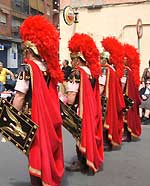
The Fiestas
One of the most obvious expressions of Valencian culture is the
numerous and often long fiestas
that take place in the city. Most of them are unique to this place,
not celebrated anywhere else in Spain, or at least in a different
form. They are usually a very old tradition from past centuries,
offering a true insight into the culture, especially since they
are just as celebrated by the Valencians of today. The fiestas in
Valencia is your chance to observe the genuine Valencian traditions
complete with Valencians
costumes, music and philosophy of life. The fiestas range from
religious celebrations and land-related traditions to the mega-festival
of Las Fallas - by far the most
complete expression of Valencian culture. Do try to plan your visit
around one of the fiestas
The Ceramics
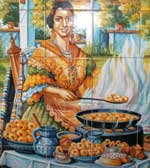
Valencian
ceramics are famous. This city has a very deep and unique tradition
in this form of art and they have become the visual symbol of Valencian
culture. Look around and you will see the ceramics everywhere -
street signs, building facades, interiors, household items. The
tradition evolves but stays - even the City
of Arts and Sciences has a great deal of ceramics in its design.
You could find out more about the ceramics in the Museum
of Ceramics, or you could visit the Lladro
centre which has become an internationally famous producer of high-art
ceramics. You can also buy yourself a souvenir in many of the Valencian
shops, especially on the Pz
Redonda
The Costumes
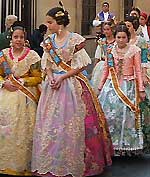
Traditional
Valencian wear is spectacular, considered the richest traditional
regional costume in Spain. So spectacular that it can cost many
thousands euros. If you are here during Las
Fallas you will see plenty of it on the street. At other times
of year, you can still see it at every small occasion, such as a
local fiesta or just an occasional parade or a wedding.These costumes
mean a lot to the Valencians and they use every opportunity to show
them - here it is still in fashion. You will also pass many shops
in the center where they are made and sold.
 The Music
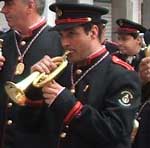
Valencia is known as the Vienna of Spain. It has the largest number of music bands in any one city of the country. They are usually wind and percussion bands playing the generally Spanish traditional muisc, or a more Valencian kind in costumes, using traditional Valencian instruments to play traditional Valencian music. The bands accompany any event in Valencia, big or small, especially the fiestas. At other times you can occasionally see them practicing on the streets of their neighbourhoods or performing in the city's auditoriums
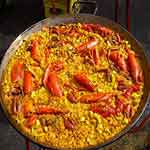 The Cuisine
In a dining-obsessed country like Spain, food is definitely part of the culture. Valencia has its own clearly defined cuisine, born from a cross of the rice culture with the products of the sea. The Paella was born here, and there is a whole range of other rice and seafood dishes on offer. The Valencians do enjoy their traditional cuisine and the paella (including a street paella on Sundays or fiestas) is an old tradition.
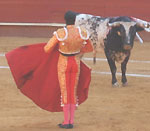 Corrida (Bull-Fighting)
Although Corrida de Toros is not a specifically Valencian tradition, it has been in and around Valencia for centuries and it is definitely one of the more traditional, ancient aspect of the local culture. Going to a corrida will submerge you into the atmosphere of old Valencia, before it got discovered. The three seasons of bull-fighting in Valencia are religiously attended by crowds of the locals.