The City Museum in Valencia, Spain. Valencian Art Collection
Museo de la Ciudad
Palacio Marques del Campo
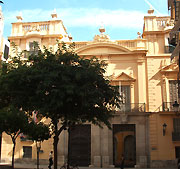
The
City Museum is a former palace of nobles, currently housing 15th to 20th
century art from the collections of the Valencian government and private
homes. Almost all of the painting and scupltures are by Valencian artists.
Some are good, some are bad, but all are unknown. If you like art you
could find this interesting - it is a pioneer territory. Perhaps you will
find someone who should have become famous but didn't. Most of the collection,
however, is religious themes of 15th-18th centuries.
The museum also holds an exhibition of medieval weights and scales, and
exhibition of medieval locks and keys, and a collection of various art
donated by a private individual.
Art: 15-20th century, all major art movements, all Valencian
Size: large
Exhibitions: permanent only
The building: former palace of Valencian nobles. Although it has been changed a lot (unfortunately all the colours were painted solid mono in the Civil War) you can still appreciate a few rooms.
MUSEUM SERVICES
Free guided tours (in Spanish)
- 1h 30 min will take you through the history of the building, functions
of rooms, and will focus on major art pieces in the collection.
10.30, 12.30, 17.30, 19.00

 Paginas
Amarillas
Paginas
Amarillas
Pz del Arzobispo, 3
Centro
Near: Cathedral
34 963 525 478, ext. 4126
 Mon-Sat
10am-2pm
4.30-8.30pm
Sun + Hols: 10am-3pm
Mondays closed
 Municipal
Scheme
Municipal
Scheme

The City Museum is housed in the Palacio Marques de Campo. It dates back to 17th century. Until very recently it was considered to be much younger but a recent sudy of drawing from the 17th century indicates otherwise. The palace was commissioned by a family of local nobles and expanded and rebuilt over the subsequent generations. In the end, the palace came to bear the names of four of the well-known Valencian families. Marquis de Campo was the most brilliant of all of the palace owners. He had formiddable power in Valencia and was also a multi-talented early industrialist, running a tobacco factory, building a railroad, and creating several other ventures as well as being a prominent figure in politics and a benefactor of arts. The palace remained the property of the family until the Civil War, when it was used as the office of the Health Minsitry of the Republican Government. The Valencian government bought the building in 1970s.